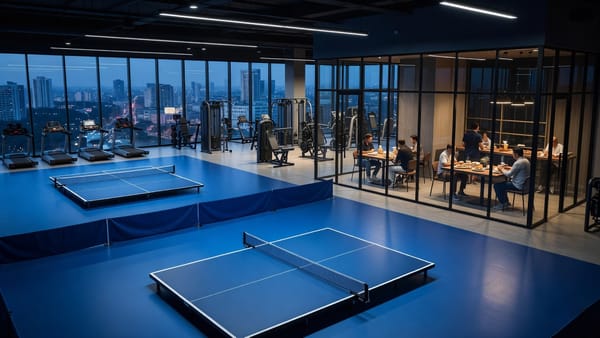



Unlock Your Table Tennis Potential with Strength Training
As a former athlete and now a mentor, I've seen firsthand how discipline and consistency forge champions. In table tennis, where split-second decisions and explosive movements dictate victory, the connection between physical prowess and on-table performance is undeniable. Many players focus solely on technique, overlooking a critical component: strength training. But let me tell you, investing in your physical foundation is not just about looking good; it's about playing better, longer, and with more power. This is your comprehensive guide to unlocking that potential.
Does weightlifting help table tennis? The answer is a resounding yes, but not in the way you might think. We're not talking about building massive bodybuilding physiques. Instead, we focus on functional strength - movements that directly translate to the demands of the game. From lightning-fast footwork to generating devastating spin, targeted strength work is your secret weapon. Let's dive into how you can elevate your game.

The Unseen Advantage: Why Strength Training Matters for Table Tennis
Table tennis is a sport of finesse, yes, but it's also a sport of power, agility, and endurance. Every shot, every defensive save, every sprint to retrieve a wide ball requires a combination of coordinated movements and muscular effort. Without a solid strength base, you're essentially trying to build a skyscraper on sand. The foundation must be strong.
The intensity of a table tennis match can be surprisingly high. Players are constantly on the move, making rapid changes in direction, lunging, and rotating their bodies to strike the ball with maximum velocity and spin. This dynamic activity places significant stress on your muscles, joints, and connective tissues. Neglecting strength training leaves you vulnerable to fatigue, decreased performance, and, most importantly, injuries. Targeted exercises build resilience and enhance your ability to perform at your peak, round after round.
Building Explosive Power for Footwork
Your footwork is your engine on the table. The ability to move quickly and efficiently to get into the optimal position for every shot is paramount. Strength training helps develop the explosive power needed for rapid acceleration, deceleration, and change-of-direction movements. This means fewer missed shots due to slow reactions and more opportunities to dictate play.
Exercises like squats, lunges, and plyometric jumps build the foundational strength in your legs and glutes. These muscles are responsible for generating the force that propels you across the court. By improving their capacity, you'll find yourself reaching those wide balls with more ease and executing quick pivots with greater stability.
Enhancing Rotational Core Strength for Powerful Shots
The core is the powerhouse of almost every athletic movement, and table tennis is no exception. A strong, stable core allows for efficient transfer of power from your lower body and hips through your torso to your arms and racket. This is crucial for generating the immense spin and speed that characterize high-level table tennis shots.
Think about the motion of a forehand loop or a powerful smash. It's a highly rotational movement originating from the ground up. Exercises that target the obliques, rectus abdominis, and transverse abdominis - such as Russian twists, wood chops, and Pallof presses - are vital. They not only increase your shot power but also provide stability, reducing the risk of back injuries often associated with forceful rotations.
Injury Prevention: Protecting Your Shoulder and Wrist
The repetitive nature of table tennis strokes can take a toll on the shoulder and wrist. Without adequate supporting musculature, you're susceptible to common injuries like rotator cuff tears, tendinitis, and carpal tunnel syndrome. Strength training plays a crucial role in fortifying these vulnerable areas.
Focus on strengthening the smaller stabilizing muscles around the shoulder joint, such as the rotator cuff muscles. Exercises like external and internal rotations with resistance bands, face pulls, and YTWLs are excellent for this. For the wrist, incorporating grip strength exercises and forearm strengthening routines will improve endurance and reduce the likelihood of strains and sprains.
Functional Exercises for Table Tennis Dominance
Moving beyond generic fitness advice, let's focus on exercises that directly mimic or support table tennis movements. These are exercises that build functional strength, the kind that translates directly to performance on the court.
Lower Body and Plyometrics for Footwork
- Goblet Squats: Builds overall leg strength and core stability.
- Walking Lunges with Torso Twist: Improves single-leg strength, balance, and adds a rotational element.
- Box Jumps: Develops explosive power for quick movements and court coverage. Aim for controlled landings.
- Lateral Bounds: Enhances agility and the ability to move side-to-side, crucial for covering the table.
Remember to focus on proper form. It's better to do fewer repetitions with correct technique than to risk injury with sloppy execution. This is where discipline in your training truly pays off.
Core Rotational Strength and Stability
- Medicine Ball Slams/Rotational Throws: Mimics the power generation in a smash and develops explosive core power.
- Cable Wood Chops/Reverse Wood Chops: Excellent for building rotational strength through the obliques, crucial for spin generation.
- Pallof Press: A fantastic anti-rotation exercise that builds deep core stability, preventing excessive twisting during shots.
- Bird-Dog: Improves core stability and control, essential for maintaining balance during dynamic movements.
Upper Body and Injury Prevention
- Resistance Band Pull-Aparts: Strengthens the upper back and rear deltoids, crucial for shoulder health and posture.
- External/Internal Rotations with Resistance Bands: Directly targets the rotator cuff muscles to prevent shoulder injuries.
- Dumbbell Rows (Bent-Over or Single-Arm): Builds back strength, supporting good posture and powerful strokes.
- Wrist Curls and Reverse Wrist Curls: Strengthens the forearms and wrists, improving grip strength and endurance.
Integrating Strength Training into Your Table Tennis Schedule
The key to maximizing the benefits of strength training is intelligent integration. It should complement, not detract from, your table tennis practice. The goal is synergy - where your physical conditioning enhances your on-court skills.
Here's a sample weekly schedule designed for dedicated table tennis players. This assumes you are practicing table tennis 3-4 times a week. Adjust based on your personal training load and recovery needs.
My Experience: A Lesson in Discipline
I remember early in my career, I was entirely focused on my racket skills. I'd spend hours practicing strokes, drilling serves, and playing matches. But I was constantly battling fatigue and minor injuries. It wasn't until I sought guidance from a seasoned coach, around my 18th year of consistent training, that I understood the missing piece. He introduced me to a structured strength and conditioning program. Initially, I was skeptical, seeing it as time taken away from the table. But within months, my stamina improved dramatically, my shots had more pace, and those nagging aches and pains started to disappear. It was a profound realization: true mastery requires a holistic approach. That period taught me the invaluable lesson that strength is not just about lifting weights; it's about building resilience and sustained performance, a principle that guides my mentoring today.
Sample Weekly Training Schedule
| Day | Activity | Focus |
|---|---|---|
| Monday | Table Tennis Practice | Technical Drills, Match Play |
| Tuesday | Strength Training (Lower Body & Core) | Explosive Power, Stability |
| Wednesday | Table Tennis Practice | Serve/Receive Practice, Strategy |
| Thursday | Strength Training (Upper Body & Injury Prevention) | Rotational Strength, Shoulder/Wrist Health |
| Friday | Table Tennis Match Play / Light Practice | Application of Skills, Endurance |
| Saturday | Active Recovery or Rest | Light stretching, Foam Rolling |
| Sunday | Rest | Full Recovery |
It's crucial to listen to your body. If you feel overly fatigued, substitute a strength session with light cardio or more active recovery. The goal is to build capacity, not to burn yourself out.
Progressive Overload: The Key to Continuous Improvement
To keep seeing results, you need to progressively challenge your muscles. This means gradually increasing the weight, repetitions, or intensity of your exercises over time. This principle, known as progressive overload, is a cornerstone of effective strength training and is widely studied in sports science, with research often published in journals accessible via platforms like Google Scholar.
Start with weights that allow you to complete the prescribed repetitions with good form. As you get stronger, gradually increase the weight or the number of reps. Don't rush this process. Consistency and patience are your greatest allies. Tracking your progress, perhaps using a simple spreadsheet or a fitness app like those offered by Microsoft's fitness ecosystem, can be highly motivating.
"The table tennis court is a stage for your body's preparation. Strength training is not an option; it's the script that enables your best performance."
The Direct Translation: Speed, Spin, and Endurance
So, how does all this physical work translate to the table? It's direct and measurable. Increased leg power means quicker footwork and better court coverage, allowing you to be in position for more effective shots. Enhanced core strength translates to more powerful serves and topspin strokes, making your attacks harder to return. Improved shoulder and wrist stability means you can maintain that power and control for longer durations, reducing errors due to fatigue.
Consider the statistics. While direct comparative studies solely on table tennis strength training are nuanced, general sports science demonstrates clear correlations. A study by the Statista platform often highlights how athletes in dynamic sports see significant performance gains (up to 15-20% in agility and power metrics) with a structured strength program.
Furthermore, the endurance aspect is often underestimated. Longer matches require sustained energy and focus. A stronger cardiovascular system, supported by strength training, will help you maintain your intensity and decision-making abilities through five-game battles, not just two.
Your Path to Peak Performance
Strength training is not an afterthought for table tennis players; it's a fundamental pillar of success. By incorporating functional exercises that target explosive power, rotational core strength, and injury prevention, you are investing in a more robust, dynamic, and resilient game.
Remember the principles: discipline in your training, consistency in your effort, and patience with the process. These are the same virtues that make a great table tennis player, and they are precisely what will elevate your performance when combined with targeted strength conditioning.
Don't let the opportunity to gain a competitive edge slip through your fingers. Start integrating these principles into your routine today and feel the difference on the table. Your future self, the one landing those winning shots with power and precision, will thank you.