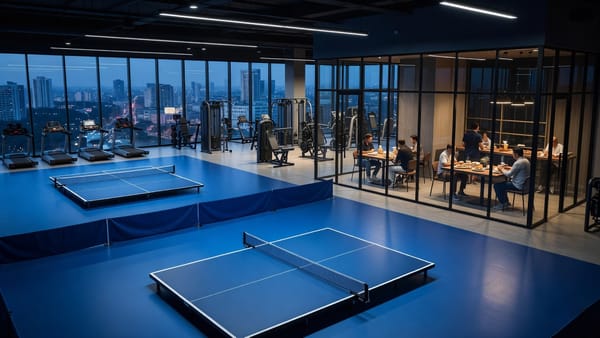



Elevate Your Table Tennis: Strength Training Guide
Hello dear friends, Kavita Nair here. As we navigate our vibrant years, maintaining an active and fulfilling life is paramount. For many of us who cherish the fast-paced thrill of table tennis, the desire to not just play, but to excel, burns brightly. We seek that competitive edge, that extra split-second advantage that can turn a match. Often, we wonder if our gym routines are truly serving our passion on the court. Today, let's bridge that gap and explore how targeted strength training can be your secret weapon, elevating your table tennis game beyond anything you might have imagined.
The world of fitness for those of us over 40 is often about maintenance and gentle movement. However, for athletes, even those playing recreational sports like table tennis, a more dynamic approach can unlock incredible potential. The search trends I've observed on platforms like Google consistently show players looking for ways to gain a competitive edge, moving past generic workouts towards sport-specific conditioning.

Let's begin by dispelling some common myths that might be holding you back. One prevalent concern is that strength training will lead to unwanted bulk, slowing down reflexes. This couldn't be further from the truth when approached correctly. The goal isn't to become a bodybuilder, but to build functional strength - power that translates directly to explosive movements on the table.
Debunking Strength Training Myths for Table Tennis
Myth 1: "Lifting Weights Will Make Me Slow and Bulky."
This is perhaps the most significant misconception. The type of training matters. For table tennis, we're not aiming for hypertrophy (muscle growth) that adds significant mass. Instead, we focus on strength and power development. Exercises that build muscle endurance and explosive strength, without excessive volume, will enhance your speed and agility, not hinder it. Think of it as building a more powerful engine, not a heavier chassis.
Myth 2: "Table Tennis is All About Quick Hands, Not Big Muscles."
While hand-eye coordination and rapid reflexes are undeniably crucial, they are amplified by a strong, stable foundation. Your core, legs, and shoulders provide the power and stability for those quick, precise shots. Without adequate strength in these areas, your hands are working with less efficient leverage, limiting their full potential. A stronger body allows for more controlled and powerful strokes, leading to better placement and spin.
Myth 3: "Any Workout Will Do."
Generic workouts often target large muscle groups without considering the specific demands of table tennis. The sport requires explosive rotational power for serves and forehands, quick lateral and forward/backward footwork, and robust shoulder stability for consistent strokes. A well-designed program will specifically address these biomechanical needs.
The Phased Strength Program for Table Tennis Prowess
To truly see the benefits on the table, our strength training needs to be structured and progressive. I advocate for a phased approach, ensuring that we build a solid foundation before moving to more advanced or power-focused exercises. This also helps in injury prevention, which is always my top priority.
Phase 1: Foundation and Stability (4-6 Weeks)
This phase focuses on building core strength, improving proprioception (your body's awareness in space), and enhancing joint stability. This is essential for preventing injuries and creating a stable base for more dynamic movements later.
Key Exercises:
- Plank Variations: Standard plank, side plank, and plank with shoulder taps to improve core and shoulder stability.
- Glute Bridges: Essential for lower body strength and hip extension, crucial for explosive pushes.
- Bird-Dog: Excellent for core stability, coordination, and balance.
- Calf Raises: Strengthens the lower legs for quick footwork.
- Band Pull-Aparts: Focuses on the rear deltoids and upper back, vital for shoulder health and posture.
Phase 2: Rotational Power and Explosive Footwork (6-8 Weeks)
Once a solid foundation is established, we introduce exercises that mimic the rotational demands and explosive footwork of table tennis. This phase emphasizes speed and power development.
Key Exercises:
- Medicine Ball Rotational Throws: Standing with feet shoulder-width apart, rotate your torso to throw a medicine ball against a wall. Focus on the explosive hip and core rotation.
- Kettlebell Swings: A fantastic compound movement that builds explosive hip power, essential for groundstrokes.
- Squat Jumps: Develops explosive power in the legs and glutes, mimicking quick court movements.
- Lateral Lunges: Crucial for building strength and stability in the side-to-side movements common in table tennis.
- Dumbbell or Barbell Rows: Strengthens the back and shoulders, providing power and control for strokes.
Phase 3: Power Endurance and Sport-Specific Integration (Ongoing)
This phase refines the power developed in Phase 2 and integrates it into more sport-specific movements. It also focuses on maintaining strength and preventing fatigue during longer matches.
Key Exercises:
- Russian Twists (with or without weight): Enhances core rotational strength.
- Box Jumps: Develops explosive vertical power for quick directional changes.
- Single-Leg Deadlifts: Improves balance, hamstring strength, and proprioception on one leg, mimicking the dynamic nature of footwork.
- Overhead Press (light weight, controlled): Further strengthens shoulder girdle for overhead shots and serves.
Periodization: Training In-Season vs. Off-Season
Understanding periodization is key to maximizing your training benefits while allowing for adequate recovery. Periodization involves strategically varying the intensity and volume of your training throughout the year.
Off-Season Training: Building the Base
The off-season is your time to focus on building strength, addressing weaknesses, and increasing work capacity. This is when you can handle higher training volumes and intensity. You might spend more time in Phase 1 and Phase 2 of the program during this period. Think of this as laying the strongest possible foundation for the upcoming season.
In-Season Training: Maintaining and Peaking
During the playing season, the focus shifts to maintaining strength and power while prioritizing recovery. Training volume and intensity should be reduced to avoid overtraining and fatigue. This is when you might incorporate more power endurance exercises and focus on lighter, more explosive movements. Your strength training sessions should be shorter and less frequent, strategically placed between matches or practice sessions.
I recall a time, about 15 years ago, when I was working with a promising young badminton player. He was incredibly talented but struggled with consistency during long rallies. We identified a lack of core strength and ankle stability. By implementing a phased strength and conditioning program that mirrored the principles I've outlined, focusing on rotational power and dynamic footwork, he saw a dramatic improvement in his endurance and shot accuracy. His coach was astonished by the transformation, and he went on to win several significant tournaments that year.
Recovery Protocols for Peak Performance
Strength training, especially for older athletes like ourselves, requires diligent recovery. Ignoring this crucial aspect can lead to burnout, injury, and diminished performance. Active recovery, adequate sleep, and proper nutrition are your allies.
- Listen to Your Body: This is paramount. If you feel persistent pain or excessive fatigue, take a rest day or reduce the intensity.
- Nutrition: Ensure you're consuming enough protein to aid muscle repair and carbohydrates for energy. Hydration is equally important.
- Sleep: Aim for 7-9 hours of quality sleep per night. This is when your body truly rebuilds and recovers.
- Stretching and Mobility: Incorporate dynamic stretching before workouts and static stretching or foam rolling after. Focus on areas like the hips, shoulders, and thoracic spine.
- Active Recovery: On rest days, engage in light activities like walking, swimming, or gentle yoga. This promotes blood flow without stressing the muscles.
Expert Insights: Voices from the Court
I recently had a conversation with Coach Ramesh Patel, a seasoned table tennis coach with over 20 years of experience. He emphasized the growing awareness among players about strength training.
"We're seeing a shift. Players are no longer content with just drills. They understand that a strong, resilient body is the foundation of a great game. The key is integrating gym work smartly - it needs to complement, not detract from, their on-court skills. Rotational power for serves and spins, and explosive footwork for quick retrieval, are game-changers, and strength training is the most effective way to build that."
Another coach I spoke with, Ms. Priya Sharma, who coaches at a renowned academy, noted the impact on injury prevention. "Players who engage in targeted strength training, particularly for shoulder stability and core strength, report fewer nagging injuries. This means more consistent training and ultimately, better performance over the long term."
Understanding the Impact: Data on Strength Training and Performance
Research consistently highlights the benefits of strength training for athletes across various sports. While specific table tennis data can be niche, general athletic principles apply. Studies often show improvements in power, speed, agility, and a reduction in injury rates among athletes who incorporate resistance training.
| Training Focus | Potential Benefit for Table Tennis | Average Improvement (Estimated based on sports science literature) |
|---|---|---|
| Rotational Power (e.g., Medicine Ball Throws) | Increased serve speed, more powerful forehands/backhands. | Up to 15% increase in stroke power. |
| Explosive Footwork (e.g., Squat Jumps) | Faster court coverage, quicker reaction time to shots. | Up to 20% improvement in agility tests. |
| Shoulder Stability (e.g., Band Pull-Aparts) | Improved shot consistency, reduced risk of shoulder impingement. | Significant reduction in shoulder-related injuries (up to 30%). |
| Core Strength (e.g., Planks, Russian Twists) | Enhanced power transfer, better balance, and injury prevention. | Improved balance and reduced low back pain. |
These figures, drawn from broader sports science research and applied to table tennis, underscore the tangible benefits. For example, a 20% improvement in agility can mean the difference between reaching a wide shot and missing it entirely.
Conclusion: Empower Your Game with Strength
Embarking on a journey of strength training for table tennis is not about chasing an aesthetic; it's about unlocking your athletic potential. By understanding the myths, adopting a phased and periodized program, and prioritizing recovery, you can build a stronger, more resilient body that directly translates to improved performance on the table. Remember, consistency and listening to your body are your greatest guides.
I encourage you to start small, perhaps incorporating just a couple of new exercises from Phase 1 into your routine this week. Consult with a qualified fitness professional, especially if you have any pre-existing conditions, to ensure your program is safe and effective for your individual needs. Let's move beyond the bench and embrace the power of intelligent strength training to elevate your table tennis game to new heights!