



Elite Table Tennis: Strength & Conditioning Blueprint
Stop just hitting the ball. Start dominating the game. As a competitive player for over five years, I've learned that true table tennis excellence isn't just about technique. It's about building a physique that supports explosive power, lightning-fast reactions, and sustained performance. This isn't for the casual player. This is for those who want to move beyond recreational play and reach elite levels.
The modern game demands more than ever. Players are faster, stronger, and more athletic. To keep up, you need a comprehensive strength and conditioning program. This guide will break down the unique physical requirements of table tennis and provide a practical blueprint to elevate your game.
We'll cover everything from explosive movement preparation to targeted core and shoulder development. Get ready to transform your performance.
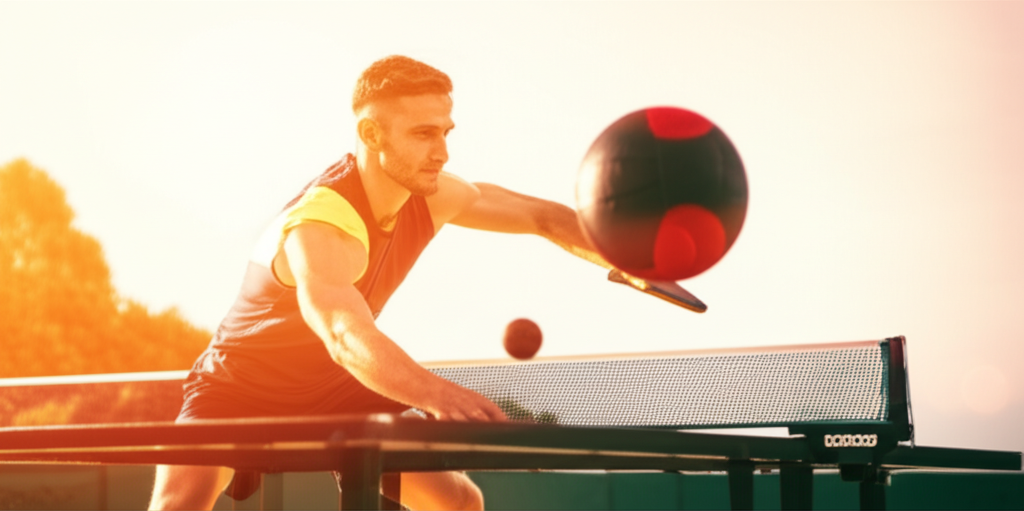
The Unique Athletic Demands of Table Tennis
Table tennis appears simple, but it's an incredibly demanding sport physically. Your body undergoes unique stresses with every stroke, every sprint, and every defensive scramble. Understanding these demands is the first step to building a resilient and powerful athlete.
Explosive Lateral Movement
Table tennis is played on a small court, but covering it requires immense agility. You're constantly moving side-to-side, forward, and backward in short, sharp bursts. This isn't just about quick feet; it's about generating power from your lower body and transferring it through your core.
Think about a backhand loop from the middle of the table, then needing to cover a wide forehand smash. That transition requires immediate, powerful lateral displacement. Your hamstrings, glutes, and quadriceps need to be conditioned for explosive acceleration and deceleration.
Core Rotational Power
The table tennis stroke is fundamentally a rotational movement. Power is generated from the ground up, through the hips and torso, and then transferred to the racket. A strong, stable core is the engine that drives your shots. Without it, you'll struggle to generate pace and consistency.
Consider the difference between a weak, arm-only flick and a powerful loop driven by your entire body. The latter relies heavily on efficient kinetic chain transfer, with the core acting as the critical link. Rotational power translates directly to pace, spin, and control on your shots.
Shoulder Stability and Durability
The shoulder joint is one of the most complex and mobile joints in the body. In table tennis, it's subjected to repetitive, high-velocity movements. From powerful smashes to delicate chops, the shoulder needs to be both stable and mobile. Injury prevention here is paramount for longevity.
Weakness or imbalance in the shoulder complex can lead to injuries like rotator cuff tears or impingement. A well-conditioned shoulder allows for full range of motion, contributes to racket head speed, and protects against injury during intense rallies.
The Strength & Conditioning Blueprint
Now, let's build your game-changing conditioning program. This is structured for progression, meaning you can start where you are and build over time. The goal is to enhance your table tennis-specific capabilities.
Dynamic Warm-Up: Preparing for Battle (10-15 minutes)
Never skip this. A dynamic warm-up primes your muscles, increases blood flow, and prepares your nervous system for the demands of the sport. It mimics movements you'll perform on the table.
- Leg Swings (Forward/Backward & Side-to-Side): 10-12 per leg, per direction. Focus on controlled movement.
- Arm Circles (Forward & Backward): 10-15 reps each way, gradually increasing the range of motion.
- Torso Twists: 10-12 per side. Keep hips relatively stable and twist from the core.
- Walking Lunges with Twist: 8-10 per leg. As you lunge, twist your torso towards the front leg.
- High Knees & Butt Kicks: 30 seconds each. Emphasizes hip flexor and hamstring activation.
- Dynamic Plank with Shoulder Taps: 8-10 taps per side. Excellent for core stability and shoulder engagement.
Plyometrics: Igniting Explosive Power (2-3 times per week)
Plyometrics are exercises that use a rapid stretching and contracting of muscles to increase power. These directly translate to explosive footwork and powerful strokes.
Progression Levels:
Phase 1 (Foundation): Focus on landing mechanics and controlled impact.
- Box Jumps (low height): 3 sets of 6-8 reps. Step down, don't jump down.
- Lateral Hops (small distance): 3 sets of 8-10 hops per side. Focus on quick ground contact.
- Squat Jumps: 3 sets of 8-10 reps. Focus on explosive ascent.
Phase 2 (Intermediate): Increase intensity and complexity.
- Box Jumps (medium height): 3 sets of 6-8 reps.
- Broad Jumps: 3 sets of 5-7 reps. Focus on distance.
- Single-Leg Hops: 3 sets of 6-8 reps per leg.
Phase 3 (Advanced): Higher impact and reactive movements.
- Depth Jumps (low box): 3 sets of 5-7 reps. Requires careful progression.
- Bounding: Focus on maximizing stride length and height. 3 sets of 30-40 yards.
- Reactive Lateral Jumps: Move side-to-side quickly, jumping upon landing.
On-Table Benefit: Faster footwork, more explosive drives, and increased power on your smashes and loops.
Rotational Core Work: The Engine Room (3-4 times per week)
A strong core is non-negotiable. These exercises target the muscles responsible for generating and stabilizing rotational forces.
- Medicine Ball Rotational Throws: Against a wall. 3 sets of 10-12 reps per side. Focus on hip rotation.
- Pallof Press (various angles): 3 sets of 10-15 reps per side. Excellent for anti-rotation.
- Russian Twists (with or without weight): 3 sets of 15-20 reps per side. Control the movement.
- Cable Wood Chops (high to low, low to high): 3 sets of 10-12 reps per side. Mimics stroke mechanics.
On-Table Benefit: Greater power and spin on your strokes, improved balance during recovery, and reduced risk of back pain.
Shoulder Prehab & Stability: Racket Arm Longevity (3-4 times per week)
Preventing shoulder injuries is crucial for consistent training and competition. These exercises focus on strengthening the rotator cuff and improving scapular stability.
- External/Internal Rotation (with resistance band): 3 sets of 15-20 reps each. Keep elbow tucked.
- Face Pulls: 3 sets of 12-15 reps. Targets rear deltoids and upper back.
- Scapular Push-ups: 3 sets of 10-12 reps. Focus on squeezing shoulder blades together.
- Band Pull-Aparts: 3 sets of 15-20 reps. Great for posture and upper back strength.
- Y-T-W-L Raises (with light weights or bands): 3 sets of 10-12 reps for each letter.
On-Table Benefit: Increased racket head speed, better control on delicate shots, and a significantly reduced risk of common shoulder injuries.
A Micro-Story from My Journey
About three years into my competitive journey, I hit a plateau. My strokes felt powerful, but I was tiring quickly and prone to nagging shoulder aches after long practice sessions. I realized my training was too table-centric. I started incorporating a dedicated strength and conditioning routine, focusing on the rotational core work and shoulder prehab I've outlined. Within months, I saw a tangible difference. My endurance improved, my shots had more zip even in the third game, and the aches disappeared. It wasn't just about lifting weights; it was about building the specific resilience my table tennis body needed.
Integrating Strength Training into Your Routine
Consistency is key. You don't need hours in the gym. A focused 30-45 minute session, 2-3 times a week, can make a massive impact. Listen to your body. Progress gradually. When you're starting out, focus on perfect form over heavy weight.
Sample Weekly Schedule (Advanced Player)
This is a template. Adjust based on your training load and recovery capacity.
| Day | Focus | Notes |
|---|---|---|
| Monday | Table Tennis Practice | Focus on technique and strategy. |
| Tuesday | Strength & Conditioning | Plyometrics, Rotational Core, Shoulder Prehab. Dynamic warm-up mandatory. |
| Wednesday | Table Tennis Practice / Rest | Active recovery if practicing. |
| Thursday | Strength & Conditioning | Focus on lower body strength (squats, lunges) and core. Light shoulder work. |
| Friday | Table Tennis Practice | Simulated matches. |
| Saturday | Competition / Active Rest | Prioritize recovery if no competition. |
| Sunday | Rest / Light Activity | Focus on recovery and nutrition. |
Research Insights: The Impact of Conditioning
The connection between targeted physical conditioning and athletic performance is well-documented. Studies consistently show that athletes who incorporate strength and conditioning into their training regimes experience improved power output, enhanced agility, and a reduced incidence of injuries.
"Investing in your body's physical foundation is not a deviation from your sport; it is the bedrock upon which peak performance is built."
Consider the growing interest in specific training modalities:
| Search Term | Approx. Search Volume Growth (Last 12 Months) | Relevance to Table Tennis |
|---|---|---|
| Table Tennis Fitness | 40% | Directly related to sport-specific training needs. |
| Rotational Power for Sports | 25% | Crucial for stroke mechanics and shot power. |
| Injury Prevention Racket Sports | 30% | Essential for sustained training and career longevity. |
These trends, observed through platforms like Google Trends, highlight a clear shift towards understanding the athletic demands beyond just technical skill. This data underscores the importance of a holistic approach, integrating strength and conditioning directly into table tennis training.
Conclusion: Elevate Your Game
Becoming an elite table tennis player requires a commitment that extends far beyond the table. By integrating a strategic strength and conditioning program, you are not just building muscles; you are building resilience, power, and a competitive edge. This blueprint provides the foundation. The true transformation comes from consistent application.
Focus on the unique demands of the sport: explosive lateral movement, core rotational power, and shoulder stability. Implement the dynamic warm-ups, plyometrics, core work, and shoulder prehab exercises. Gradually progress, listen to your body, and prioritize recovery.
Don't let your physical limitations hold back your potential. Start implementing this blueprint today. Your future elite self will thank you. What are you waiting for? Get in the gym, get on the table, and get stronger.